The open plan wasn’t just about style — it was a social promise

In countless modern homes, the open-plan design has become a ubiquitous layout, blending kitchens, dining areas, and living rooms into a single, flowing space. This configuration is often lauded for its spaciousness and ability to foster interaction among family members. However, the roots of this design trend extend beyond mere stylistic preferences, tapping into a profound social and moral narrative that sought to reshape domestic life.
The open-plan design didn’t originate solely as a tactic to make spaces appear larger or more connected. Instead, its origins are steeped in the social ideals of the early 20th-century modernist movement. This architectural philosophy aimed to transform not just the aesthetics of living spaces but the fabric of domestic life itself. By tearing down walls, architects and designers of the era hoped to create homes that were not only more efficient but also more egalitarian. It was a vision of a progressive society where physical barriers mirrored the removal of social hierarchies within the home.
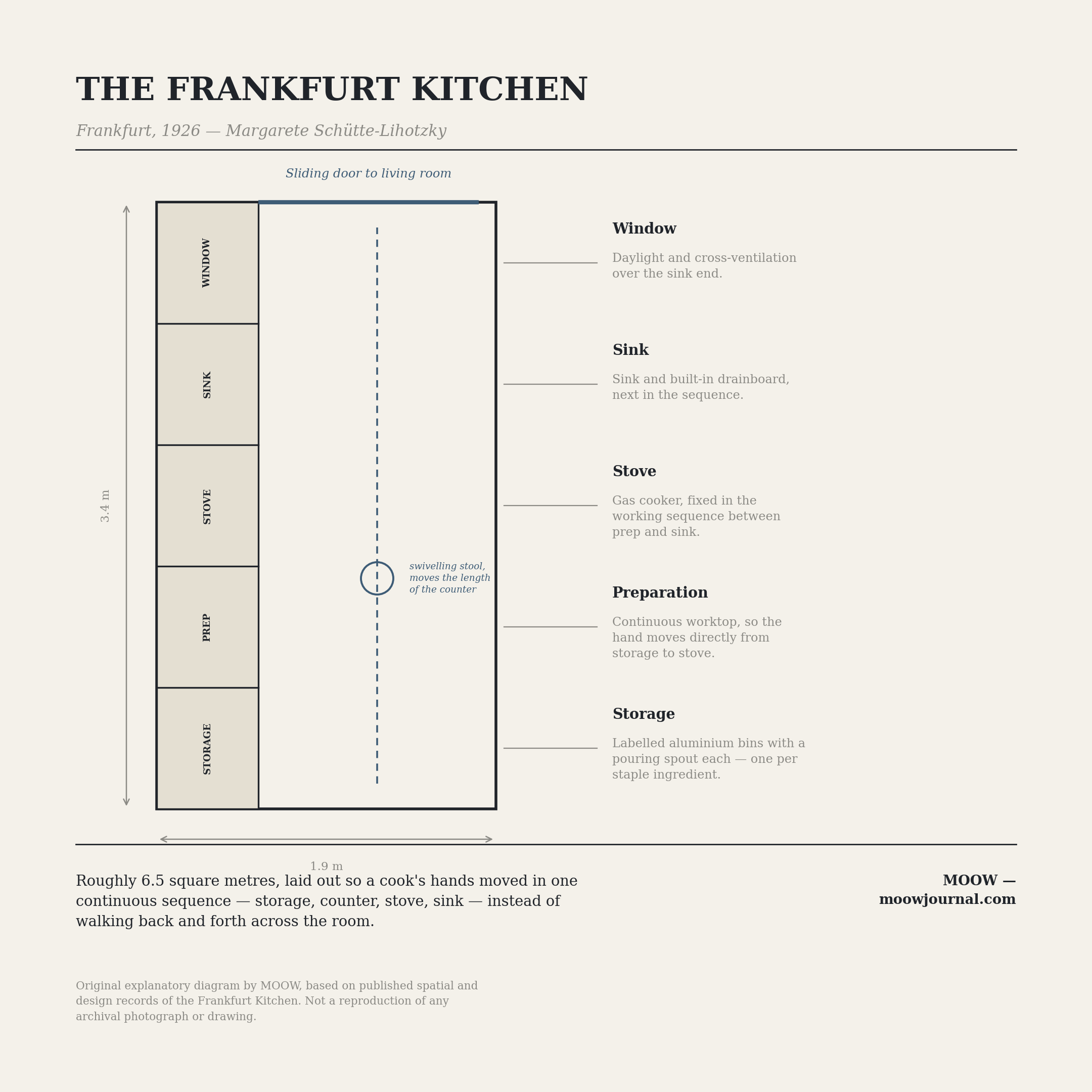
Prominent figures in architecture, such as Frank Lloyd Wright, played pivotal roles in advancing this concept. Wright’s designs often featured flowing spaces where one room seamlessly transitioned into another. His Robie House exemplified this approach, where the interconnectedness of rooms was meant to reflect a harmonious and integrated lifestyle. Across the Atlantic, European designers like Grete Schütte-Lihotzky brought these ideas into a more functional realm. Her Frankfurt Kitchen was a masterpiece of efficiency, designed to streamline domestic work and democratize household tasks, setting a standard for modern kitchens that emphasized not just form but also social function.
This shift was more than an aesthetic evolution. It was a deliberate move towards a vision of home life that prioritized efficiency, hygiene, and social equality. The Museum of Modern Art has curated exhibitions that highlight how the modern kitchen became a focal point for these ideals. The Frankfurt Kitchen, for instance, wasn’t just about cooking; it symbolized a rationalized approach to household management and a new orientation towards social roles within the home. In postwar Britain, the open-plan home was seen as a beacon of modernity, promising adaptability and upward mobility for families.
However, the idealism that fueled the open-plan revolution was not without its critics. As early as the 1960s, concerns began to surface regarding the practicality of these designs. A thesis from the University of North Carolina in 1967 highlighted persistent issues such as noise, lack of privacy, and visual clutter, which have continued to challenge the utopian promise of open-plan living. These criticisms reveal that while the open-plan design aimed to dismantle barriers, it inadvertently introduced new challenges that families have been grappling with ever since.
Today, homeowners frequently seek ways to reintroduce some of the boundaries lost to open-plan designs. The use of partial walls, strategically placed furniture, and acoustic treatments are modern solutions to the age-old problem of balancing openness with privacy and quiet. The reality is that while open-plan homes offer a more connected living experience, they also require thoughtful adaptations to address the practical needs of everyday life.
This ongoing negotiation reflects a broader conversation about how we live and interact in our domestic spaces. The open-plan home is more than just a design choice; it is a manifestation of our attempts to reconcile social ideals with the practicalities of daily life. It challenges us to consider how we can create spaces that both connect us and allow for personal retreat.
In viewing the open-plan design through this lens, we gain a deeper appreciation for its complexity. It is a testament to the enduring human aspiration for a more connected and equitable living environment, yet it also serves as a reminder of the compromises necessary to achieve such ideals. The open-plan layout continues to evolve, shaped by the ongoing dialogue between our aspirational visions and the realities of our lived experiences.